

Bee, Wasp & Hornet Control in Frederick, MD.
Stinging-insect work depends on identification, nest location and safe access. Bees, wasps, hornets and yellowjackets can require different responses.
Coverage is limited to ZIP codes 21701–21705.
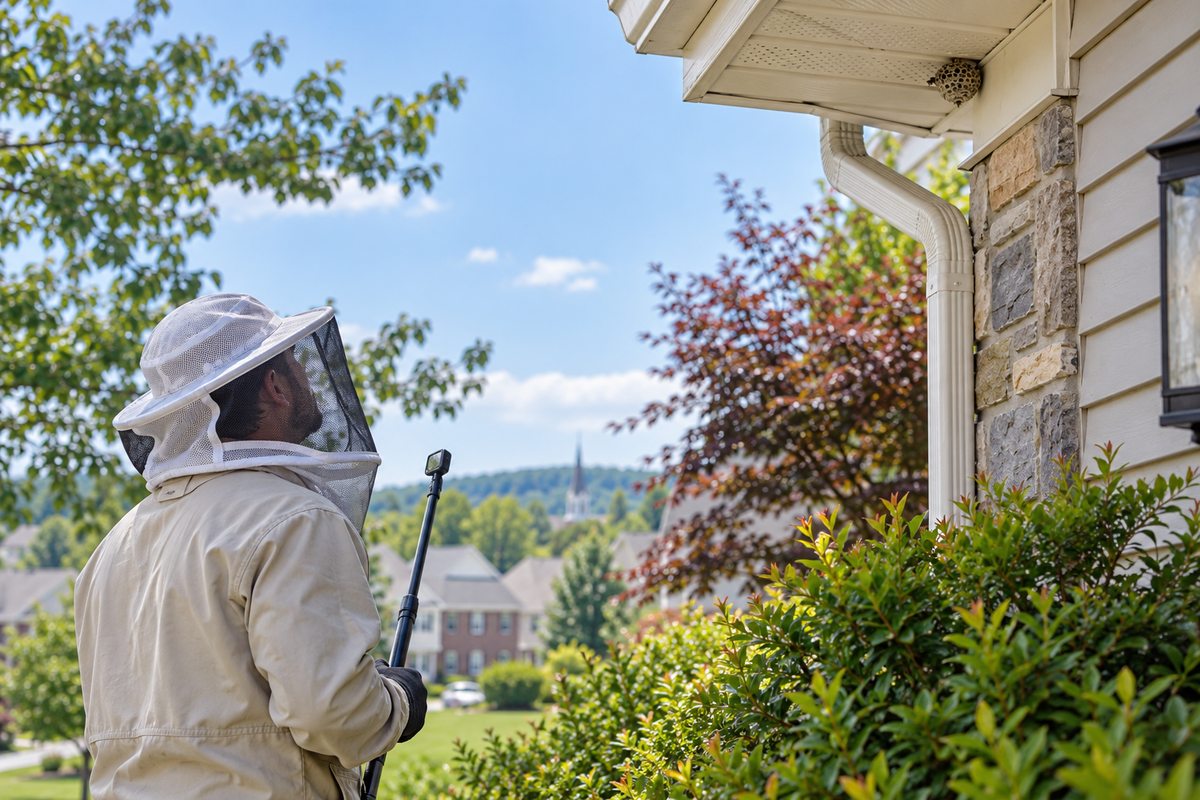
Understanding bee, wasp & hornet control.
Stinging-insect work depends on identification, nest location and safe access. Bees, wasps, hornets and yellowjackets can require different responses.
A useful plan for bees, wasps, hornets, yellowjackets and nest access begins with observable evidence. The location, frequency, life stage, building conditions and previous products can all change the assessment. A pest name supplied over the phone is a starting point, not a substitute for identification when different species require different methods.
For Frederick properties, construction and use matter as much as the ZIP code. Detached homes, row homes, apartments, historic structures, offices and storage buildings can have different foundations, shared routes, moisture sources and access limitations. The proposal should explain why the selected approach fits this property rather than presenting one standard treatment as the answer to every situation.
Research-backed facts that shape the service.
- University of Maryland Extension notes that yellowjackets often become more troublesome from late summer into early fall.
- Social wasps may use exposed paper nests, ground cavities or structural voids, and the visible entrance may not show the full nest.
- Sealing an active structural entrance too early can redirect insects into occupied space.
These facts help organize an inspection, but they do not establish the condition remotely. Clear photographs, intact specimens, monitoring records and access to the affected area improve the quality of the assessment. When structural material, contamination, bites, wildlife or stinging insects are involved, avoid disturbing the evidence merely to obtain a closer view.
Conditions that can support activity.
- protected eaves, soffits and wall openings
- ground cavities near paths and play areas
- food and waste around outdoor gathering areas
- vegetation concealing a flight path or nest
Conducive conditions do not prove an infestation and should not be used to blame an occupant. They show where prevention, maintenance or access work may support the control plan. In rentals and commercial sites, responsibility may be divided among residents, management, maintenance teams and the pest provider, so assignments should be written clearly.
How inspection and management may be approached.
- distant identification and traffic observation
- assessment of nest location, height and safe access
- targeted control or removal where appropriate
- timing of exclusion or repair after activity is resolved
Integrated Pest Management uses identification, monitoring, prevention and carefully selected controls. This can include pesticide applications when appropriate, but the product label controls the target pest, site, rate, placement and precautions. Applying more product, mixing products or treating an unidentified pest is not a stronger plan.
The inspection should also state its limitations. Finished walls, stored belongings, unsafe access, locked rooms and concealed construction can prevent a complete view. Recording those limits is more useful than implying that an inaccessible area was cleared.
Residential and commercial considerations.
In a home, the plan may need to account for children, pets, sleeping areas, kitchens, stored belongings and work schedules. Ask for preparation and re-entry instructions that match the actual method. Do not rely on a generic claim that every treatment is “safe”; risk depends on the product, placement, exposure and adherence to the label.
Commercial and multi-family work can require access coordination, monitoring records, tenant communication and operating restrictions. Food-handling, healthcare, childcare or regulated facilities may have requirements beyond an ordinary residential visit. Describe how the property is used before scheduling so service suitability can be confirmed.
What affects the service scope and quotation?
Pricing and visit needs depend on the confirmed pest, extent of activity, affected areas, property size, access, construction, materials, preparation, monitoring and follow-up. Exclusion, cleanup, damaged-material removal and repair are separate tasks unless a written proposal specifically includes them.
Ask the provider to identify the target pest, included areas, proposed methods and conditions that could change the price. A clear proposal also explains what the customer must complete, when treated areas can be used again, how progress will be evaluated and what is outside the scope.
Preparing for an enquiry.
Have the full service address and ZIP code ready. Describe the affected rooms or outdoor zones, when signs began, how often they appear and what has changed around the property. List every product or repair already attempted. Mention pets, allergies, tenants, access problems, sensitive equipment and any deadline connected to a transaction or facility requirement.
Do not perform extensive preparation before receiving method-specific instructions. Moving belongings, sealing an active opening, washing away evidence or applying a repellent spray can make identification harder or conflict with the proposed control.
Frederick's covered ZIP codes include a mix of older and newer construction, but age alone does not predict a pest problem. Renovations, additions, shared walls, drainage, landscaping and maintenance history can create very different conditions at nearby addresses. Note recent plumbing work, roof or siding repairs, deliveries, travel, tenant changes and landscape alterations because these details can help explain when activity began. If the concern appears only after rain, at night, during heating or cooling cycles, or in one season, include that pattern. A short evidence timeline gives the inspector a stronger starting point than a general request to treat the whole property.
Questions worth asking.
- What evidence supports the identification?
- Which rooms, exterior zones or structural areas are included?
- What sanitation, moisture or exclusion work is recommended?
- What preparation and re-entry instructions apply?
- How will monitoring or follow-up determine whether activity remains?
- Which licensing, certification or permit applies to this work?
Related Frederick pest guides.
These educational guides explain identification and prevention in greater detail. They do not replace an inspection where pest identity, structural impact, health precautions or regulated documentation affects the decision.
Sources and further guidance.
- University of Maryland Extension: Common Household Insect Pests
- EPA: Selecting a Pest Control Service
Service is published only for properties in Frederick ZIP codes 21701, 21702, 21703, 21704 and 21705. Geographic coverage does not by itself confirm current availability or suitability for every specialist task.
Signs worth discussing.
- A visible nest under an eave or branch
- Repeated traffic into a wall or ground opening
- Activity near doors, patios or walkways
These signs support an enquiry but do not establish a diagnosis by themselves.
What the service conversation covers.
- Discuss identification and nest location
- Assess access and service suitability
- Explain treatment or removal boundaries and precautions
Request a written description of included areas, methods, preparation and follow-up.
Prepare without making the problem harder.
- Keep people and pets away
- Do not block an active opening
- Describe height and access from a safe position
What affects the quote?
Property size, affected areas, access, confirmed activity, materials, inspection needs and follow-up can affect scope. Treatment, exclusion, cleanup and repair should be itemized when separate.
Related services.

Commercial Pest Control
A service plan shaped around the way the property operates.
Explore commercial pest control
Bee, Wasp & Hornet Control questions.
How is bee, wasp & hornet control scoped?
Affected areas, access, evidence and the proposed method determine the work. Ask what is included, what needs a separate quote and whether inspection or follow-up is required.
What information should I have ready?
Share the property ZIP, affected rooms or outdoor areas, when signs began, previous treatments and any household or operating restrictions.
Will one visit solve the problem?
Visit needs vary by pest, activity, access and method. The proposal should explain monitoring or follow-up without promising permanent eradication.